



Latest on RTO & Return‑to‑Office Mandates in Corporate America
By Brad Winkelmann – Owner, Arlington Abodes Realty & Property Management
Serving Arlington, Alexandria, Falls Church, Ballston, Del Ray, McLean & surrounding Northern Virginia
In 2025 and heading into 2026, one of the most significant drivers for residential and commercial real estate in Northern Virginia will be the wave of companies instituting Return to Office (RTO) mandates. When major employers call staff back—sometimes five days a week, sometimes a stricter hybrid schedule—it ripples out through housing demand, commuting patterns, rental strategies and investment outlooks across Arlington, Alexandria, Fairfax County and beyond.

Below I break down seven key trends tied to the RTO shift—from renewed urban demand, to suburban repositioning, to transit‑oriented investment that landlords and homeowners in Northern Virginia need to understand. With 20+ years of local market experience, I’ll also highlight how I advise my landlord and investor clients to capitalize on or guard against these shifts.
1. Renewed Demand for Urban Housing in Northern Virginia
As companies push employees back into physical offices, neighborhoods that offer short commutes, robust transit access, walkability and urban amenities will once again become hot real estate zones. In Arlington, Alexandria, and near major employment hubs, expect increased competition for homes and rentals close to Metro stations, tech/federal job centers and vibrant urban corridors.
For example: While many remote‑work households left the city during the pandemic, workers returning five days a week will place higher value on proximity to the office, less commute time, and easier access to social/amenity‑rich environments. That will likely drive up rental rates and sale prices in neighborhoods like Ballston, Clarendon, Crystal City, Rosslyn and Del Ray which provide walkability + transit + job access.
What this means for you:
-
Sellers in urban core zones may be able to capture higher pricing or faster lease‑ups.
-
Landlords should expect tightened vacancy rates and higher rent growth near transit and employment hubs.
-
Buyers should act swiftly in well‑positioned neighborhoods, as competition intensifies.
2. A Shift in Suburban & Rural Housing Markets
During the height of remote work many householders migrated to farther‑out suburbs and even rural areas for more space, yard, and affordability. However, as RTO mandates ramp up, the appeal of very long commutes or weekend‑only office attendance reduces.
-
Far‑flung suburbs/rural areas may see growth slow, or even price corrections, because commuting becomes less attractive.
-
Commutable suburbs – those within 20‑40 minutes of job centers or with robust transit options (e.g., McLean, North Arlington, Fairfax) – will retain or increase appeal, especially for hybrid‑work families.
-
Homes with larger floorplans, outdoor space, and home‑office setups remain in demand—but location and commute burden will matter more than during full‑remote years.
Actionable takeaway:
If you own investment properties in remote markets, evaluate your exit strategy or adjust holdings. If you’re acquiring in suburbs, prefer those with high commute amenity scores and transit connections.
3. Hybrid Work & Housing Flexibility Become Core Buyers’ Criteria
While some companies are going full‑RTO (five days a week), many are landing on hybrid models: some days in office, some days remote. That means housing needs are evolving:
-
Buyers and renters are looking for multi‑functional homes: dedicated home offices, flexible living space, quiet corners for remote days.
-
Proximity to transit and major employment hubs remains relevant; so does suburban space for remote days.
-
Sub‑markets that offer both access to workplaces AND quality-of-life features (good schools, outdoor space, quieter neighborhoods) will benefit.
In Northern Virginia, neighborhoods like Del Ray, Ballston, and Fairfax County’s closer‑in suburbs are well positioned: they balance suburban comfort and city‑access.
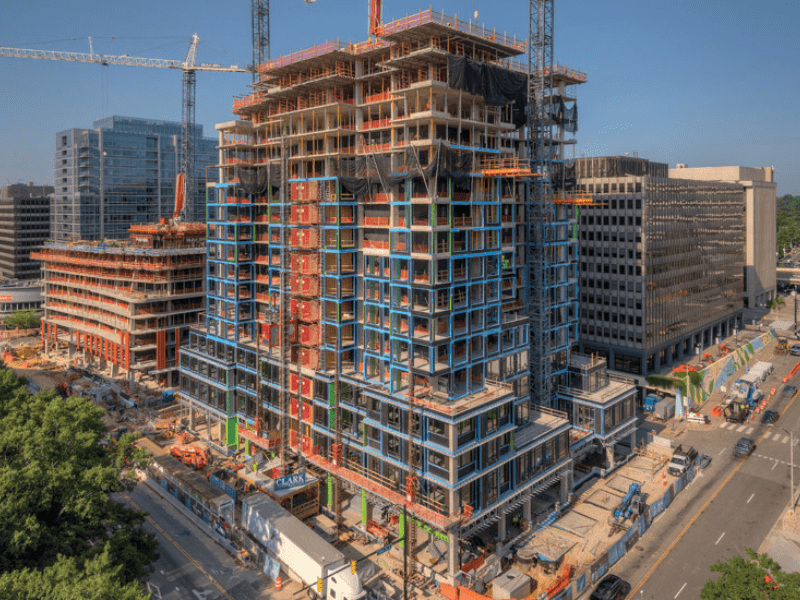
4. Revitalization of Commercial Real Estate & Changed Office Demand
RTO mandates don’t only impact homes—they influence the commercial real estate market too. As offices see more in‑person days:
-
Urban business districts (Arlington, Clarendon, Crystal City) may see increased office lease demand, renewed foot‑traffic in downtown cores, and more café/retail activity.
-
However, the nature of office space is changing: businesses are seeking “experience‑driven”, flexible floorplates, hybrid‑ready infrastructure, co‑working or shared space options.
-
For landlords and investors: properties near transit, with amenity‑rich settings, adaptable floorplans and strong occupancy will outperform older, single‑use office buildings.
5. Fluctuations in Housing Prices Across Location Types
The combined impact of RTO + hybrid work + evolving preferences means housing prices will behave unevenly:
-
Urban zones with high job density + transit are likely to see price upticks, and rentals will tighten.
-
Distant, less‑commutable suburbs may see price softening or slower growth as demand subsides.
-
Suburbs that strike the right balance between commute time & lifestyle will continue to hold or grow.
-
For landlords: rent levels and vacancy rates will respond faster than sale‑prices, so monitoring lease‑market shifts gives early signals.
6. Transit‑Oriented Development (TOD) Gains Premium Importance
When RTO mandates push more workers back into offices, the value of transit‑accessible living and mixed‑use communities rises sharply. Homebuyers and renters will increasingly prefer locations near Metro stations, bus lines, major highways, walkable retail and amenities.
In Northern Virginia: Ballston‑Metro corridor, Rosslyn–Courthouse, Clarendon, Crystal City, and neighborhoods along the Silver/Blue Lines will likely benefit. For investors and landlords: properties in or near TOD zones are strong acquisition targets; for owners: positioning your home near transit adds market strength.
7. Impact on Investment Strategies for Residential & Commercial Owners
Especially for landlords and real‑estate investors in Northern Virginia:
-
Residential: Multi‑family housing in urban zones will tighten. Suburban investment requires location‑quality. Focus on homes near transit, job access, good schools.
-
Commercial: Consider converting older offices into mixed‑use, co‑working, residential or flexible workspace models if lease demand for standard office drops.
-
Mixed‑use developments (residential+retail+office) in high‑demand corridors near Metro will be “where the action is.”
-
Monitor metrics: commute times, lease‑rates, vacancy, days‑on‑market, and job‑center employment trends. As you know, I help landlord clients integrate property‑management data (occupancy, rents, turnover) with market‑analysis for smarter decisions.

Why My Local Expertise Makes the Difference
As owner of Arlington Abodes Realty & Property Management, I bring two decades of Northern Virginia market experience—covering Arlington, Alexandria, Falls Church, McLean, Del Ray, Ballston, Crystal City and adjoining areas. That means:
-
I understand the fine‑grain differences between micro‑neighborhoods (walk score, transit, schools, job‑nodes).
-
I work with military, federal/government and tech‑sector clients whose commute/access demands are distinctive.
-
My property‑management platform gives landlords real‑time data on local rental performance, which ties into investment strategy aligned with these RTO‑driven shifts.
What You Should Do Now
If you’re a homeowner, buyer, investor or landlord in Northern Virginia:
-
Review your location quality — Examine commute time, transit access, amenity scores. If you’re in a distant, marginal zone, consider repositioning.
-
Update your home or rental offering — Highlight features suited for hybrid work: home office space, strong internet/connectivity, outdoor area, proximity to transit.
-
For sellers — Use current data: where are buyers relocating to as RTO happens? Price accordingly and leverage demand in stronger zones.
-
For landlords — Track lease‑market shifts: Are rentals near job hubs leasing faster? Are farther‑out properties showing higher vacancy? Adjust property‑mix accordingly.
-
Stay ahead of commercial‑to‑residential opportunities — With office demand shifting, older buildings near transit may become conversion targets.
-
Partner with a local expert — The RTO market shift is region‑specific. Having a management and advisory team grounded in Northern Virginia (as we offer) gives you a competitive edge.
Conclusion
Return‑to‑Office mandates aren’t just a workplace story—they’re a game‑changer for real estate. In Northern Virginia, expect urban housing to gain ground, well‑connected suburbs to thrive, and investment strategies to pivot around commute‑access and flexibility. Whether you own, buy, rent, or invest, staying ahead of these shifts is crucial.
If you’d like to explore how these trends apply to your property, your portfolio, or your next acquisition in Arlington, Alexandria, Falls Church, Ballston, Del Ray or McLean — I’m here to help.
Call me at 703‑850‑5223. Email me at brad@arlingtonabodes.com.
For more information about Property Management and Real Estate Services, please feel free to contact us at Arlington Abodes Realty & Property Management. Also, follow me on Facebook for tips and news. Also consider our other resources such as: "Will Arlington County Property Owners Pay More Taxes in 2025," "Missing Middle Arlington: Key Zoning Laws Every Property Owner Should Know," and "Arlington Virginia Home Affordability: Understanding the 2024 Housing Market Trends."
